Learning the hard way,
growing together

FRIDAY FARM LETTER • OCTOBER 2, 2026
Faith • Stewardship • Hard Work
Learning the hard way, growing together
Hello, friends!
Starting a farm can be intimidating. You can love the animals, have a vision for the land and be willing to work hard - and still find yourself wondering where to begin. The paperwork, funding questions, fencing and unexpected animal situations don't arrive with a handbook.
Farming came to Logan and me later in life. We both own Löshá Farms; the work and the dream belong to both of us. You don't have to have every answer before you begin. We certainly didn't!
When the 2023 fires came, the pasture and trees stopped feeling like scenery. We began asking: how do we care for this land before the next hard season? Our first classroom is our own land. The real work happens one gate and one acre at a time.
We're new to this, too. We're trying to find the time, figure out funding and cover feed, fuel and everything else a farm needs. Goodness, it adds up! Some days the question is simply: how do we make this work?
That's why we started this letter. We want our friends, including those who don't have a farm, to see what this life is really like. There will be good days, hard lessons and surprises. We want to share them honestly, with the joy and faith that carried us here.
As grants, training and resources come across our path, we'll share selected information here and on our website. We can't list everything. But we can help one another find a starting point. Come through the gate. You're welcome here.
Beginning farmer: I thought that meant us!
Logan and I bought our first 20 acres as a farm. When the 40 acres next door came up for sale, we wanted to expand - and we wanted to buy that land under our farm name, as a farm. That was when we learned about FSA beginning-farmer financing. Beginning farmer sounds like us, right?
I used to work for the government. I understand paperwork. I wasn't going to let a stack of forms defeat me, so I kept trudging through. We worked on our plan, gathered information and even went through an inspection. That first loan path still didn't work out.
In our case, I was told we needed three years of experience. My military experience helped reduce that requirement to two years. But you still have to show that you can repay the loan. When you're just starting, that can feel like being asked to prove the farm is working before you've had much chance to build it.
The gentleman helping us was wonderful. Instead of leaving us at a dead end, he said, let's try a microloan. That gave us another way forward. There was still paperwork and a business plan, but having someone willing to help made such a difference.
For FSA, “beginning farmer” generally means someone who has operated a farm for no more than 10 years; other requirements still apply. It does not automatically mean someone starting with zero experience. Each loan has its own requirements, including experience and the ability to repay. That can be a tough hurdle when you are still building your farm.
There are different land-purchase paths. FSA lists up to $600,000 for regular Direct Farm Ownership loans. Its Beginning Farmer Down Payment program can provide up to $300,150 for FSA's portion of the purchase; it is not a $300,000 grant or the limit for every beginning-farmer loan. Ask your local officer about the whole financing plan and what fits your situation.
Ownership microloans offer up to $50,000 and terms up to 25 years; regular direct ownership loans can run up to 40 years. Your signed note controls your actual term and payment schedule. Don't be defeated if one path doesn't fit. Ask about other programs, experience substitutions and help preparing a realistic farm plan.
Ask your local FSA office about your optionsFSA ownership microloan termsFSA land-purchase programs and loan limitsFind your local USDA service centerBoy, are we trying!
Did you know farmers may qualify for grants and conservation assistance to help build their businesses and care for their land? Boy, are we trying!
I've been asked, “Hey, I hear you're doing these grant things. What are they, and how do you find them?” I had zero clue either until I found FarmerCampus.com, a farmer-education website with online classes and learning resources. I looked through the classes, took some, and a grant class with Attila helped explain where to start. Hearing from people who had already walked that road helped, too.
On September 25, we learned that our WSDA Climate Smart Farm Equipment application was not selected. We were pursuing equipment support as part of our longer-term land-stewardship and future fire-mitigation plans. WSDA explained that available funds were committed before our application was reached; the result did not reflect our proposal's quality or eligibility. That was disappointing, but it is also a reminder to prepare early and keep going. A possible spring 2027 return depends on funding - it is not guaranteed. Heck, we haven't landed a grant yet - but that doesn't mean we're done trying!
Where do you look?
Start with your state agriculture department, USDA/FSA and NRCS, your local conservation district and reputable farm organizations. Farmers.gov can help you find your USDA service center. Many of our leads are Washington-specific because that is where our farm is; if you live elsewhere, check your own state and county. Search by your project, then read the official program instructions.
How do you know when it opens?
Check the official application window and sign up for program updates. Keep opening dates, deadlines and required documents together. A social-media post can point you somewhere; the official instructions tell you what is actually open.
What goes in an application?
Follow its questions. Explain your project, who benefits, your budget and timeline, and how you'll measure results. Gather required quotes and records. Check matching funds, reimbursement rules and whether approval is needed before spending.
Keep learning with us
We'll do our best to keep the resources we find on our website and share updates in the Friday Farm Letter. You can visit our Farmer Resources page anytime. Will we find them all? No! But we'll keep looking. Know an opportunity or a useful resource? Send it to us so we can check it and share it. This is about helping each other.
Visit Farmer Campus: classes and farm educationOur Farmer Resources page: visit anytimeThe WSDA equipment program we applied forWhat is coming up?
Selected leads checked October 1, 2026. Washington dates and state programs apply here; readers elsewhere should check their own state. Confirm the current rules and fit with the official office.
EQIP: conservation help, explained
NRCS's Environmental Quality Incentives Program pairs conservation planning with financial assistance for approved practices. Depending on the plan, ask about prescribed grazing, conservation fencing, livestock water, soil health and forest management. It is not unrestricted money for any equipment. Washington's posted application date is December 18, 2026. Contact your local NRCS office early; confirm approval and contract requirements before spending.
Official detailsCSP: build on conservation you already do
The Conservation Stewardship Program helps producers expand existing conservation efforts. Washington's posted application date is December 18, 2026. Ask NRCS which program fits your land and operation.
Official detailsFarm to Stay: coming in late November
AFT and Airbnb plan $5,000-$10,000 grants for eligible farms developing or expanding farm stays and experiences. Applications open in late November 2026; detailed eligibility is still forthcoming. Introductory webinars: October 14 at 2 p.m. Pacific and November 13 at 9 a.m. Pacific.
Official detailsSpecialty Crop Block Grants: a different fit
WSDA's FY2027 concept-proposal deadline is October 30, 2026, at noon Pacific. These projects must benefit the specialty-crop sector or multiple growers; this is not a general livestock or single-farm equipment grant. Follow the official page for the current request for proposals.
Official detailsA “not yet” can hurt. It can also teach us how to prepare for the next opening. Keep asking, keep learning and don't give up.
Resources and places to find local helpA pumpkin-patch story I wholeheartedly recommend

This October, I'm especially excited to share The Adventures of Little Miss Nissa: A Day at the Pumpkin Patch, by Leda Wicknor.
It's a lovely family story for fall. The full-color illustrations are beautiful, and what I particularly love is the richer vocabulary. A story can be warm and fun while giving a child a new word to ask about. That little conversation is part of the gift.
That matters personally to me. Growing up, I wish I'd had more opportunities to stretch my vocabulary. I love giving children those opportunities early: reading together, pausing over an unfamiliar word and discovering its meaning. We don't have to wait until second grade to enjoy that kind of learning together.
It's hard for a new author to get noticed. Children aren't usually choosing and buying their own books - parents, grandparents and the people who love them are. This is one of my strongest personal recommendations from a new author. Consider it for a fall read-aloud, a grandchild or a family heading to the pumpkin patch.
We're planning to put a hard copy in Logan's office for people to enjoy, and we'll keep sharing it throughout October. Share it out! Let's help Leda Wicknor get this lovely fall story into more hands this month. It's a wonderful time to support new authors, local writers and our friends who are putting their work out into the world.
The square is a QR code: open your phone's camera, point it at the code and tap the link that appears. Or click a retailer button, or type loshafarms.com/little-miss-nissa. Choose Amazon, Barnes & Noble or Walmart. Purchases are handled by the retailers.

Ruairidh, always part of our farm family
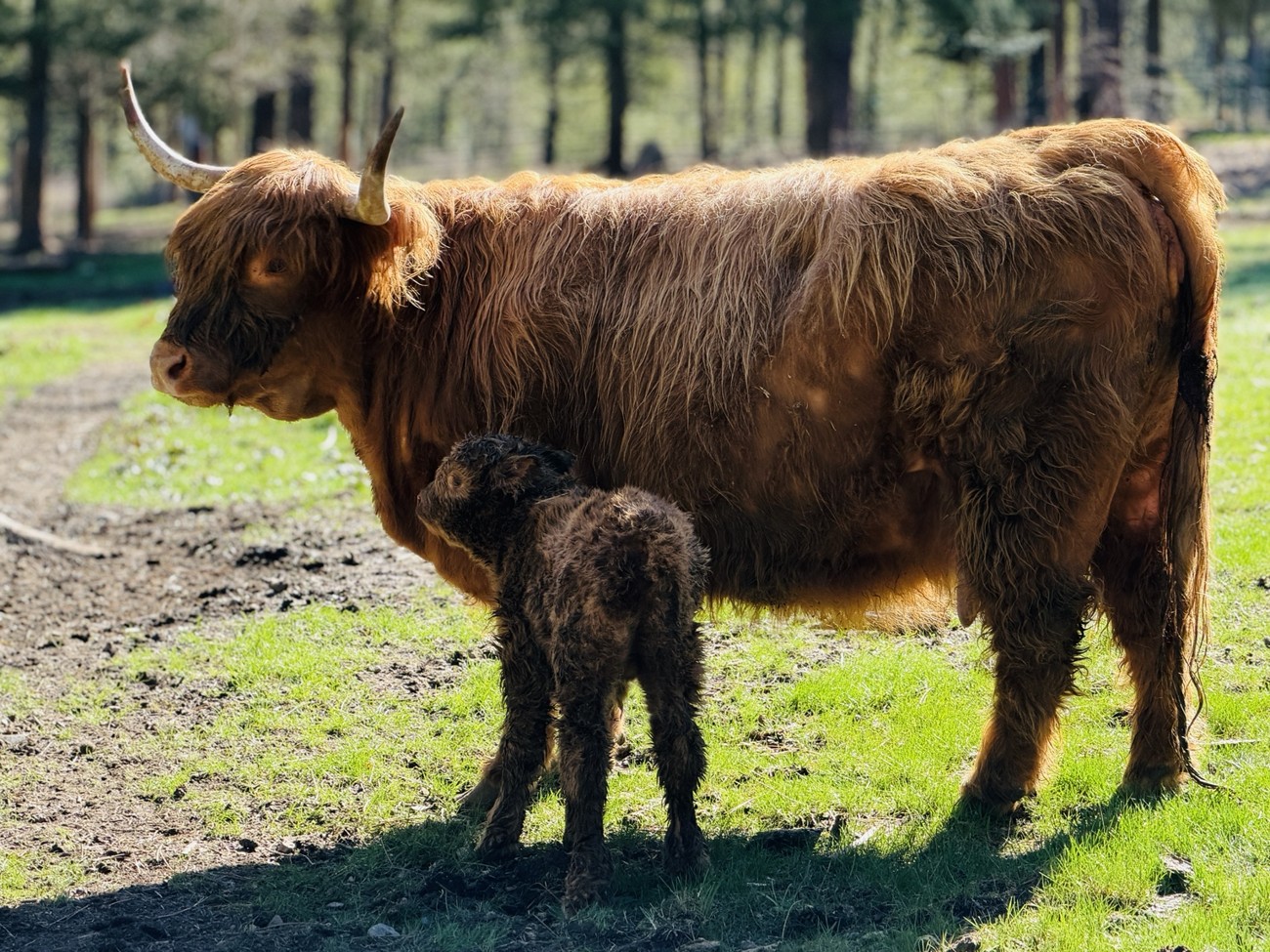
Our little Highland, Ruairidh - whom we call Rory - is heading to his new home on Saturday, October 3.
His keepsake book is made for his new owner! They will be picking him up Saturday, and we're so excited for his next chapter. Putting the book together reminded us how many memories one little calf can leave behind.
We are very picky about where our animals go. We don't sell one of our Highlands to just anybody, and we feel wonderful about the beautiful home waiting for Ruairidh. We look forward to pictures and updates. He'll always be part of our Löshá family.
Some animals leave our pasture without ever leaving our hearts. Thank you for following his story with us.
Looking ahead, two of our Highlands and our Angus are expecting. Interested in a future Highland? Use our farm inquiry form, choose “Animal purchase,” and tell us what you're looking for. We'll share updates as the calves arrive and future availability is known.
Who did it better?


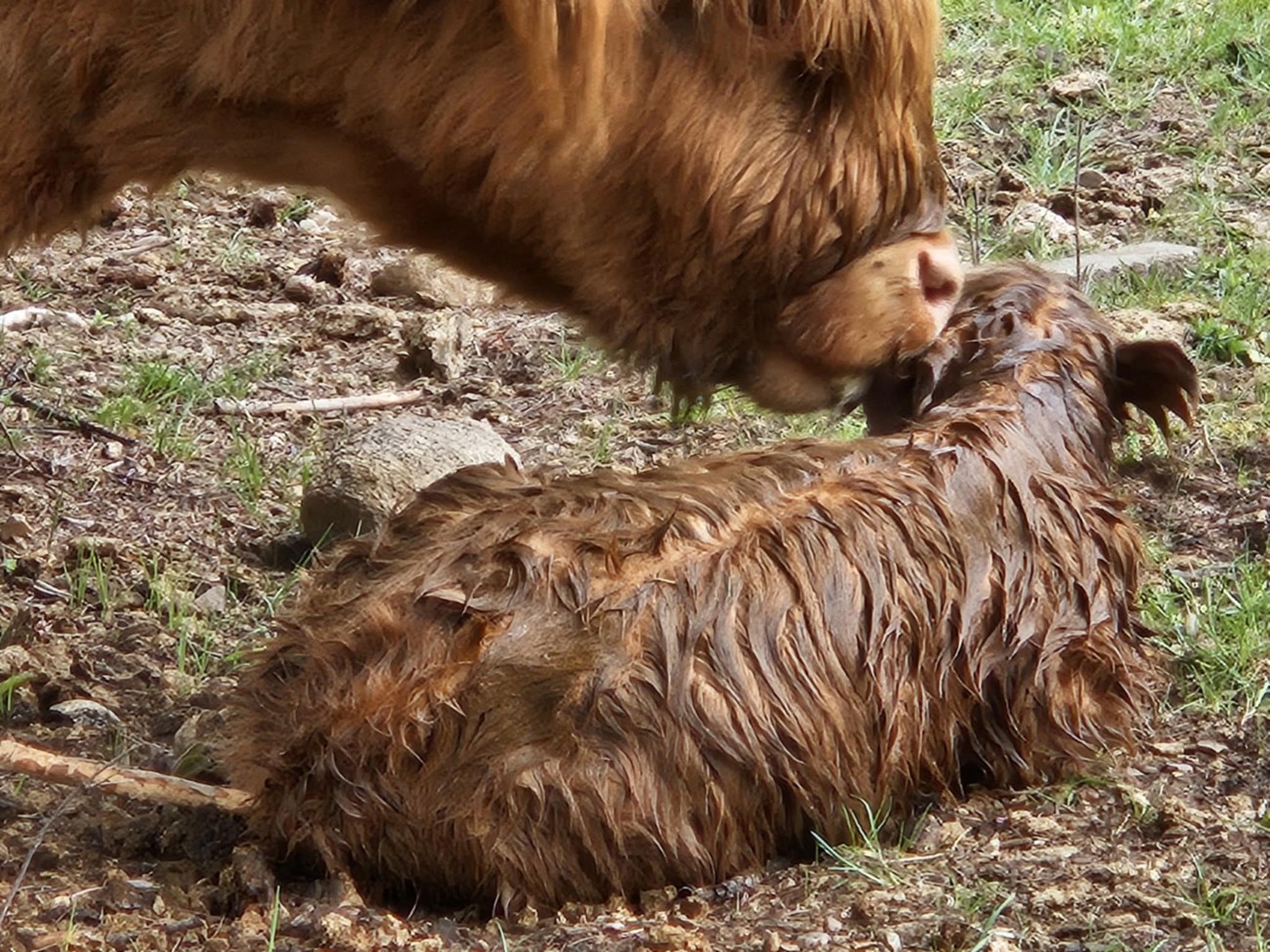
Logan and I have been working with our Kiko girls, practicing moving from fence to fence. These little training sessions are part of preparing our future fire-mitigation helpers. There's patience, repetition and plenty of personality involved. Watch the clips and tell us: who did it better? You'll find our social-media buttons on the final page. Come become our friends there, too!
Watch the Kiko girls moving fence to fenceWatch Logan’s training clip
Watch Keisha’s comparison clip
What kind of goats do we have at Löshá Farms?
Kikos and Nigerian Dwarfs: what's the difference?

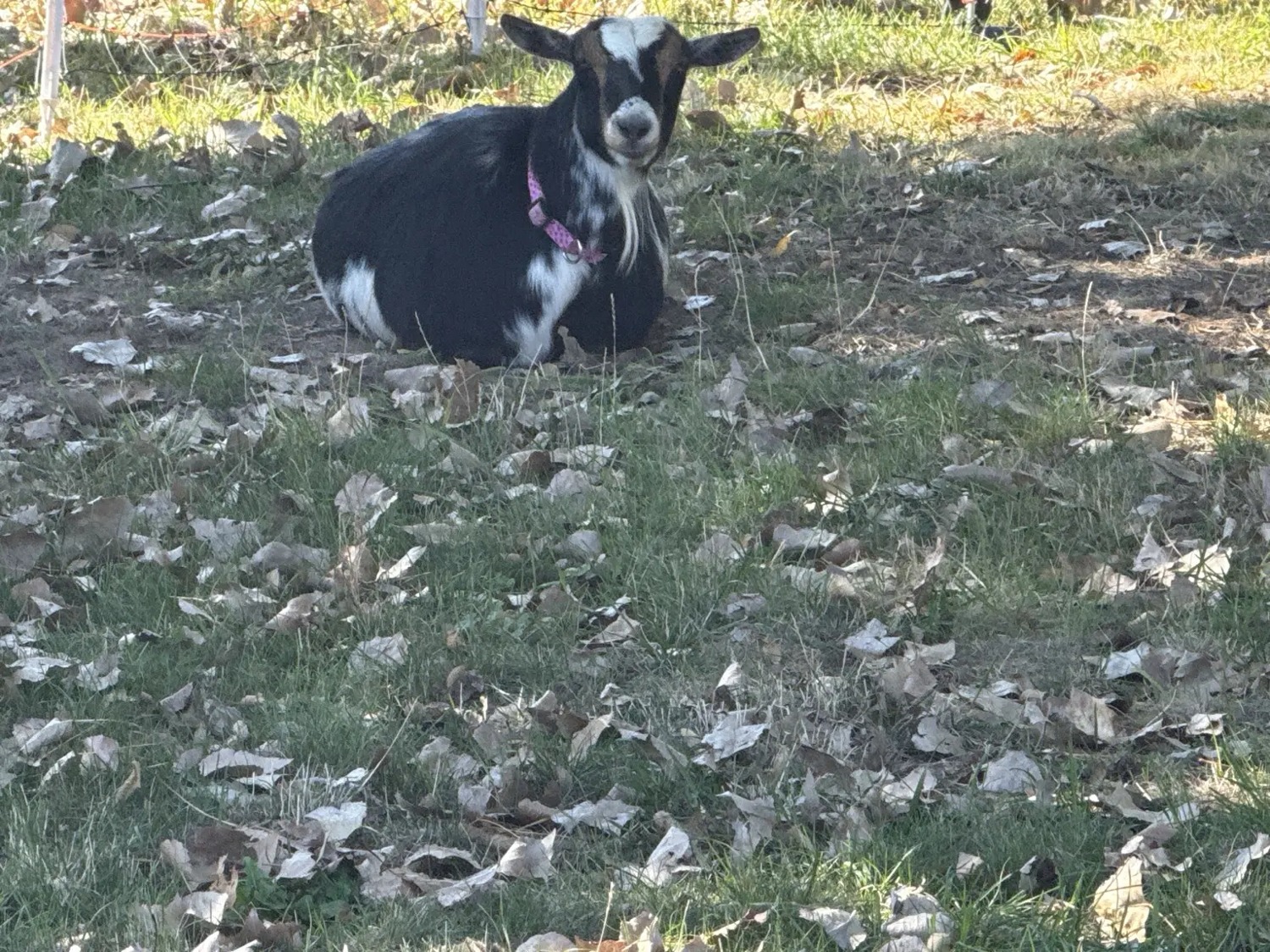
Our Kiko girls, including little Periwinkle, and Matilda, our Nigerian Dwarf.
Our three Kiko girls are Periwinkle, Dolly and Sugi, whom we call Shuggy. We bought them as 100% Kikos. They were born April 15–18, 2026, so they're about five and a half months old as we write this letter. Our two Nigerian Dwarfs are Heidi and Matilda.
What is a Kiko? A meat-goat breed developed in New Zealand, selected for survival and growth in hill-country conditions. They grow much larger than Nigerian Dwarfs. Our little girls are still growing; “Kiko” does not mean they're ready to breed.
What is a Nigerian Dwarf? A miniature dairy-goat breed. Heidi and Matilda are here for milk. They're currently dry because I hadn't found the buck I wanted to use for them. That was our plan - until this week gave us another lesson!
And the boys? Thor is our Alpine × Kiko buck. Loki is his wether companion - a castrated male who can't sire kids. They keep each other company in a separate area from the does.
Why Kikos on our land? We're preparing for a future fire-mitigation project. Goats browse brush and woody growth, including vegetation they can reach while standing. We chose Kikos with that work in mind; several breeds are used for targeted grazing.
Fire mitigation means reducing vegetation that can fuel a fire. Goats are one part of our plans, alongside forest thinning, pruning and managing slash. It takes suitable fencing, water, supervision and good animal care. We're learning on our own land before making promises about what we can offer others.
Kiko breed guide: Oklahoma State UniversityOur farm historyOur future grazing and fire-mitigation plansNow that you know about our goats, listen to what happened to us!
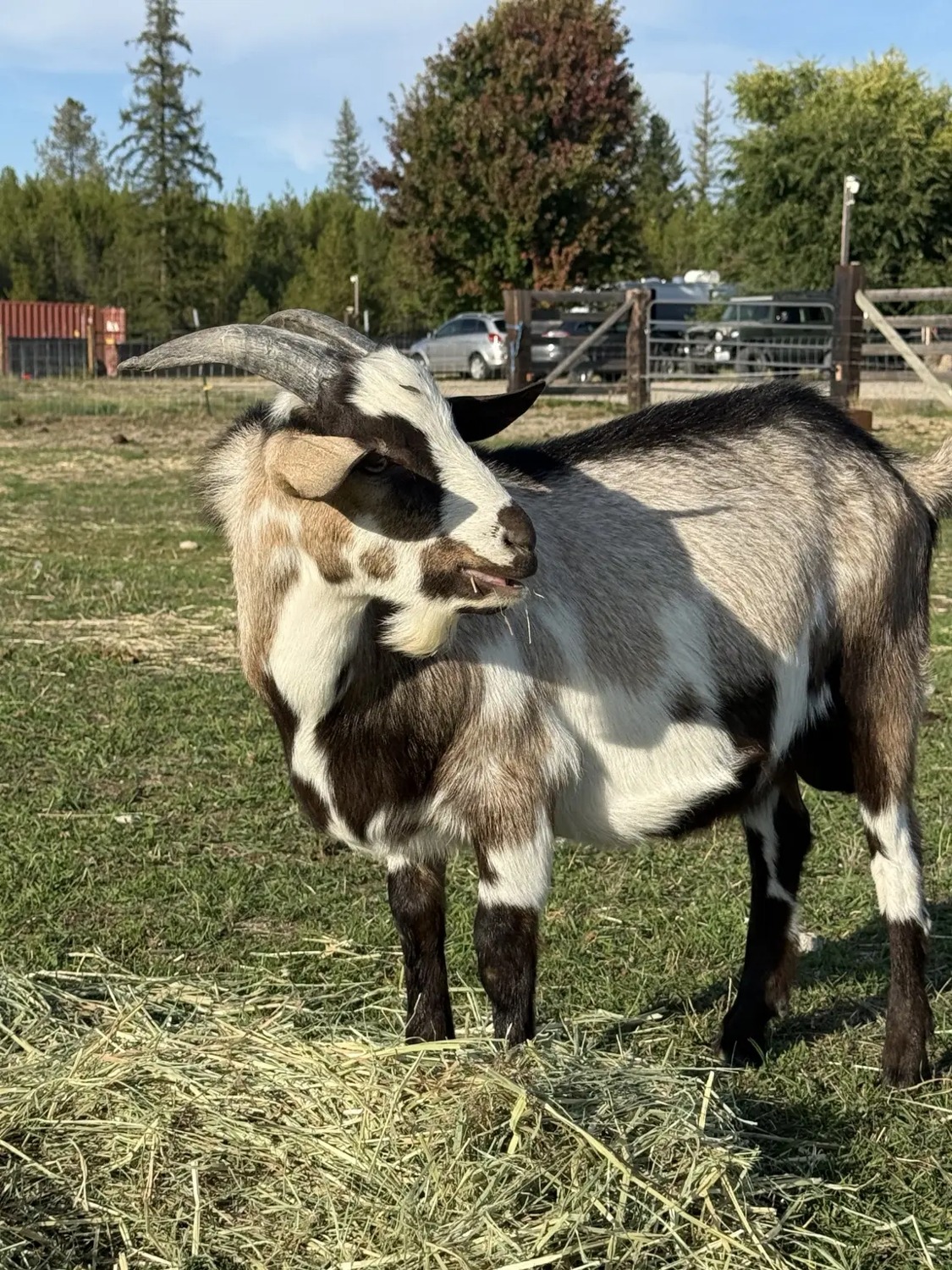
Well, we told you we love to learn the hard way. On Sunday, September 27, Logan and I were at church for about two hours. Everything was supposed to be locked up. What we hadn't caught was that the gate chain's attachment was loose in the wood. Somehow the gate opened, and Thor got in with the girls.
I witnessed him breeding Matilda. She was in standing estrus. I didn't even know that word before all this! Estrus means heat, the part of a doe's cycle when she is receptive to breeding. “Standing” means she stands and allows the buck to mount.
Our Kiko girls - Periwinkle, Dolly and Shuggy - may also have been exposed, but I did not witness any of them being bred or see clear heat signs in them. The next day Heidi was trying to get Thor's attention across the fence. That looked like heat to me, but I never witnessed a mating between them either.
Why am I worried? These girls are still babies themselves. Periwinkle was about 15 pounds at my last weighing, and I'm guessing around 17 pounds now - that needs a fresh weighing. Dolly is small too; Shuggy is the biggest, but still little. Their age and size matter because they're still developing.
Being able to conceive does not mean a young doe is physically ready to carry and deliver kids. Extension guidance emphasizes reaching an appropriate share of mature body weight before breeding. We need our vet to assess our actual girls, not simply assume they'll grow enough in time.
Thor is larger than our Nigerian Dwarfs, which had me thinking, oh my goodness, are we going to have giant babies? Our vet helped put that fear in perspective. The mother influences development, but her smaller size doesn't guarantee small kids or an easy birth. We still need to watch the situation closely.
So now what do we do?
If any pregnancy resulted from September 27, the usual roughly 150-day goat gestation would put kidding around late February 2027. That is a planning estimate, not a confirmed pregnancy or due date.
Our vet explained that there are medications that can end a goat pregnancy, including prostaglandin-based treatments. In our consultation, the clinic discussed an option around seven to ten days after exposure and possible later options if pregnancy is found. The drug, timing, risks and decision have to come from a veterinarian who knows the doe.
We were worried about putting the girls through treatment, and we've chosen monitoring for now while working with our vet. She is helping us weigh the risks of treatment and continuing a pregnancy for each individual doe, especially for such small, young girls.
Our vet has seen accidental breedings before and was reassuring. We're thankful for that, but it doesn't settle the outcome. We need to agree on testing and follow-up, rather than rely on a growing belly or other outward signs alone. Pregnancy can be checked with blood testing or ultrasound at the appropriate time.
We're hoping Matilda was the only one bred. If pregnancy is confirmed in anyone else, we'll make those decisions with our vet as the facts become clearer. Secure separation, repairing the gate hardware, pregnancy checks and a plan for problems all belong in the follow-up. We'll keep you posted as we learn.
Has this ever happened to you? What helped you handle it? I'd love to hear your experience, including something from years ago. I'm also learning from Leslie Svacina at Cylon Rolling Acres through Grazing with Leslie and its Learning Lab resources. There never seem to be enough hours to learn everything! Send your useful resources and management lessons our way.
Goat pregnancy and gestation: Merck Veterinary ManualPregnancy testing: Merck Veterinary ManualBreeding readiness: Penn State ExtensionVeterinary research: prostaglandin pregnancy terminationGrazing with Leslie: practical goat resourcesWhy in the heck is this egg black?

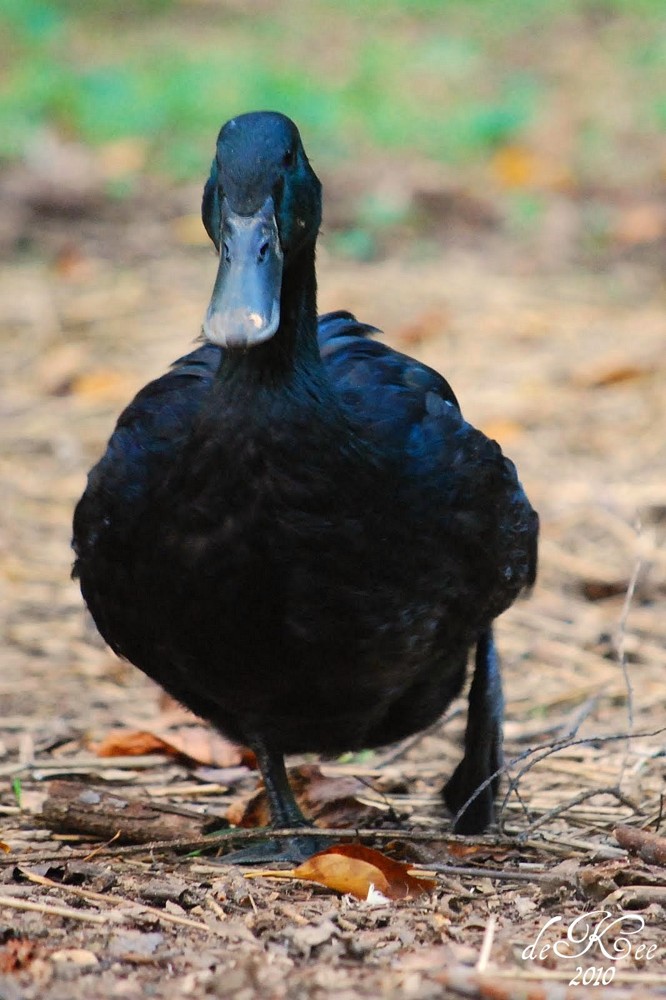
A dark egg in your order might make you stop and wonder. Is something wrong with it? Let's talk about our Cayugas!
What if I get a black egg in my Löshá Farms duck-egg order?
What in the world is this? An occasional very dark egg may come from our Cayuga ducks. That shell color is normal for the breed.
Does dark mean gross or bad?
No. Dark shell color is normal for Cayugas; color itself is not a freshness test.
Is it black inside?
No - you'll find ordinary egg white and yolk.
Does the pigment change its flavor?
Shell pigment does not create a special flavor. Use it like other duck eggs for ordinary cooking and baking.
Cayugas have black feathers with a green, blue or purple iridescent sheen in sunlight. Their eggs can start very dark and lighten through the laying season. Source: The Livestock Conservancy.
Cayuga facts: The Livestock ConservancyDuck photo: Dana Kee • CC BY 2.0

We keep several duck breeds, including Cayugas, Pekins and Welsh Harlequins, and sell duck eggs as our birds lay. Interested? Open our inquiry form and choose “Egg availability.”
Ask about duck-egg availabilityTwelve unexpected little surprises

Watch the turkey surprise here
I was walking around feeding when I heard a tiny baby chirping. What the heck? We already had young turkeys, but they're more like teenagers now. Who was making that little baby sound?
I looked in the area where our ponies used to be, which the birds can now use. There was a hen turkey with her wings spread just a little - because there were so many babies tucked underneath her. Twelve little babies! I could not believe it.
I hadn't even realized she was missing. I hadn't found her eggs. Apparently, she had a whole project going on without adding me to the planning committee!
One thing I've learned by watching our own turkeys is that the hens can share nest duties and help care for babies. Maybe that helps explain why I didn't notice this mother was off doing her own thing. I can only guess - but watching their motherhood has been such a joy.
Now Logan and I are wondering about the duck eggs we haven't been finding. Are there hidden nests out there too? We haven't found any surprise ducklings, but goodness, imagine finding another little family! We're keeping an eye out.
Our hens have babies too. As I write on Thursday, October 1, the eggs in our incubator have about three days left before their expected hatch. There is a lot of new life happening here!
And this is part of something practical, too. We're trying to become more self-sufficient, eat well and raise some of our own food. Some birds will be part of that future food supply. Caring well for them and being honest about that purpose are part of our stewardship.
For now, I'm just enjoying this little family. Watch the video and tell me: have you ever discovered a whole brood you didn't know was coming?
Follow our farm clips on YouTubeWatch the turkey surprise
Thank you for learning alongside us
Thank you for learning alongside us. This is exactly what we want our Friday Farm Letters to hold: the real stories, useful information, lessons learned the hard way and little joys that make the work worthwhile.
Have you learned the hard way on something? We're professionals at that - but we would love to get better at it!
We want to share, and we want to learn. Not all of us have it together. Some people look as though they do and may be struggling; others may quietly have a lesson that could help the rest of us. We need to be a community. We need to help each other.
You don't need to own a farm yet, or have every answer, to belong here. Maybe you're dreaming about starting later in life. Maybe you just want to understand what your farming friends are doing all day. We're glad you're here.
Send us a story, a question or a resource at loshafarms@outlook.com. You can find selected resources on our website anytime, and follow the everyday farm clips using the buttons below. The @ sign marks our account name; online, simply click the platform you want.
With gratitude, Keisha, Logan & the Löshá Farms family. Faith • Stewardship • Hard Work.
Email us: loshafarms@outlook.comVisit our Farmer Resources page anytime